Blind Hand
A story about how not to photograph an ice storm

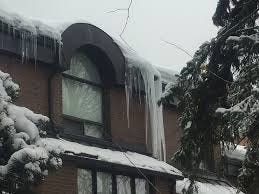
Even before hitting the ground, Andrea felt herself break inside. The night was cold and quiet as they fell through it. Tumbling through space, she saw their lives flying apart. When she opened her eyes, the constellations were wheeling across the sky. Her husband was a crumpled heap in the darkness beside her.
They fell off the roof because Andrea had wanted a photograph.
From the safety of their second story apartment, she’d watched the Maxey Christian Home for Men across the street. On nice days, the drunks carried chairs into the yard where grass refused to grow. They sat and stared at the broken wine bottles and crushed beer cans littering the sidewalk in front of the last place they could imagine living.
“There but for the grace of God...” Dan said, peering over her shoulder.
For a newspaper reporter, Andrea’s husband wasn’t very curious. His pat pronouncements on grace, luck and fate infuriated her. The Maxey’s drunks had a certain quality she could name but that she had seen before in photographs by Walker Evans, Margaret Bourke-White, Diane Arbus — their sharecroppers, prisoners and prostitutes met your eyes, dared you to look away from their lives.
On the night that they fell, Dan had made a fire in the hearth and gathered the week’s newspapers to clip out his articles. Andrea was browsing through Avedon’s collection of posed cowboys. Firelight flickered across the slick pages. She mentally rearranged the photographs to her liking. A tilt of the head here, more of a slouch there, leveling the look of their bright eyes.
Outside, an ice storm had coated the world in crystal. She could hear tree limbs cracking under the weight of the ice, tires squalling on the glazed pavement. Across the street, icicles fringed the gables of the Maxey. The front of the house was dark, but she spied movement upstairs. A curtain rustled in an open window. A pair of pants left on the sill to dry had frozen stiff. Andrea imagined a wizened drunk inside, shivering naked.
Trembling herself at the image, Andrea fetched the used Leica Dan had bought her for Christmas. When she raised the window, a draft blew Dan’s newspapers across the floor.
“Hey!” Dan scrambled for his clippings. “What do you see out there?”
“That pair of pants hanging down with all that ice.”
Dan came to the window. He kneaded her shoulders with gentle hands, the way he did in bed before they made love.
“Don’t you think that’s the saddest picture you ever saw?” she said.
“Nice, but it won’t make the front page.”
Andrea climbed out onto the dormered roof with her camera. She wanted a tight frame to capture the heartbreaking lines of the ice and pants. Her butt slid off the windowsill. Ben grabbed at her.
“This is crazy. Why don’t you come back in the house?”
“Just a minute. Hold on.”
Her feet shuffled on the roof as she adjusted the camera. Black ice layered the shingles. Shutter speed at half a second, faster than the blink of an eye. Exposure wide open. There was just enough light from the street lamp. Elbows poised on her knees to support the camera. If she didn’t breathe, didn’t flinch, she might get her shot. The blurry ice came into sharp focus, the trousers flapped stiffly in the crosshairs of the lens.
Andrea leaned forward, clicked the shutter and started to slide. Roofing nails tore at her jeans but could not stop her. Dan toppled out the window behind her, his fingernails snagged in her sweatshirt. Together — Andrea on her back, Dan headfirst, the camera between them — they slid down the roof, tumbling over the gutter and dropping seventeen feet into the yard.
Ursa Major. Ursa Minor. Cassiopeia. Perseus. The names spun in her head as the stars blinked in frozen space.
She rolled over in the cold grass. Dan’s head rested next to the sidewalk. His hand twitched on the concrete. He had lost one of his slippers, and his pale foot jerked from side to side.
Andrea hobbled across the street to the only place with any lights on, any sign of life. She pounded on the front door of the Maxey. A boy with bulging eyes peered through a beveled side window.
“Help me! My husband’s hurt.”
Distorted by the glass, the boy’s face leered at her. Finally, an older man opened the door.
She shivered in the foyer as the man dialed 911. The television was on in the next room, but the drunks sitting on the sofa all watched her.
At the emergency room, the doctors insisted on admitting Andrea for observation. Dan had already gone upstairs on a gurney. Her injuries proved not as serious as his, but extensive: a twisted knee, a dislocated shoulder, a cracked rib, a bruised kidney that had the nurses emptying her urine bag hourly. She was listed in good condition.
Upstairs in ICU, Dan lay unconscious. He had suffered a hairline fracture at the base of his skull and a dozen broken bones in his right hand. The doctor said he was lucky. Another three inches, and Dan’s head would have hit the sidewalk. A few degrees colder, and the ground would have been no more giving than the pavement.
Andrea was released the next afternoon, but she could not leave the hospital. She waited in his room, by his bed, dozing in a chair, until 11, twenty-four hours after the fall, before Dan finally awoke.
“Thirsty,” he said.
She started in her chair then fumbled for the glass on the sidetable. He sipped it through a straw.
Groggy, but out of danger, he was moved out of the unit to a regular room. Andrea stayed by his side. She watched tv with him, adjusted his pillows, fell asleep late at night in the chair by his bed.
The swelling in his head took a week to subside before Dan could go home.
A cheerful male orderly rolled Dan out to their car in a wheelchair. He put Dan in the passenger side, and, before closing the door, said “Stay away from open windows, you hear?”
“I’ll try.” Dan managed to smile.
Andrea drove home with a grimace: operating the clutch hurt her bandaged knee. But she was more afraid any sudden lurch might kill her husband with his skull wrapped in fine gauze.
She parked on the street and with her cane limped around the car to help Dan. The unseasonably warm day had brought the drunks outside the Maxey. They watched the new invalids, unsteady on their feet. Dan saluted with his bandaged hand, but the drunks did not wave back.
“Not much further. A little more. That’s it.” Andrea coaxed him up the stairway.
Dan’s bad hand weighed across her shoulders, the other turned white gripping the banister. The stairs seemed higher than before, more treacherous. The lip of each step caught at Dan’s heavy feet and at the tip of her cane. Andrea kept her eyes down, counting under her breath: ten narrow steps to the landing, then two to the right, another small landing, then five to the top.
He must not fall, not ever again.
At the last landing, Dan hesitated. “Who’s hanging on to who?” he asked.
Her fingernails were digging into his arm.
Headaches had never bothered Dan before. Now Andrea didn’t dare run the vacuum -- the noise hurt his head. The television was too loud. The lowest volume disturbed his rest. When he slept, she sat quietly and watched the dust settle.
Dan had never even taken aspirin before. Now brown plastic prescription bottles littered the apartment. Insurance had picked up most of the hospital stay but didn’t cover the price of pills. Dan needed so many -- vitamins, painkillers, tranquilizers. Andrea wrapped her knee in an elastic bandage and hobbled to the corner drugstore for more medicine.
They lived on a downhill street in a neighborhood poised between historic district and slum. The genteel families who had once owned these Victorian and Queen Anne houses were long dead or withering away in nursing beds. No one protested as former mansions became group homes for the mentally retarded, the schizophrenic, the addicted. All of Andrea’s neighbors were recovering from some affliction.
As her injuries healed, Andrea took to longer loops around the neighborhood, instead of the beeline between pharmacy and sickroom. She picked her way carefully amid patches of snow and frozen puddles. Tree roots buckled the sidewalk, making her stumble. She saw how the rain had ripped away the asphalt to reveal the original cobblestone street. The stones were stamped with the faint name Reynolds Block. More names marked the street corners: Waneta, Cullowhee, Soco, City Works Department, 1921. The letters were obscured by dirt, dead leaves, cigarette butts.
Step on a crack, break your mother’s back. Andrea remembered the childhood chant when she came across the faded outlines of a hopscotch pattern chalked in white. She walked everywhere with her eyes down.
One day Andrea collided with a fat woman. “Bitch! Look what you done!”
Andrea hadn’t seen her coming down the sidewalk. Groceries spilled everywhere. Andrea quickly knelt at the woman’s swollen ankles, stuffing cans of beans, soup, and cat food back into the paper bag.
“Sorry, my fault. It was an accident,” Andrea apologized, rising with the reclaimed groceries.
The woman’s coat reeked of perfume, tobacco, sweat. She wore a respirator over her nose and mouth as if repulsed by her own smell.
“Sorry don’t help what happened,” the fat woman muttered under her mask. But she took the bag from Andrea.
When Andrea got home, Dan was sitting by the window in the weak sun. He was feeling stronger. For therapy, he practiced his signature with cramped fingers. At his feet were yellow pages torn from a legal pad, marked with a spidery hand Andrea did not recognize.
“Something very strange happened to me downtown,” Dan announced.
That morning he’d gone downtown to the newspaper office for the first time since the accident. Andrea knew he was anxious about returning to work.
“Yes, go on. I can hear you.” Andrea trembled in the kitchen as she washed her hands. She could still smell the fat woman on her fingertips.
“Someone pulled a gun on me in the street,” Dan said.
She left the water running and walked to the doorway, her hands still dripping.
Dan sat with his legs crossed at the knee, his right foot kicking leisurely in the air, as if waiting for nothing in this world. His hands, good and bad, rested on the carved arms of the chair.
“I’m walking and I see an armored truck pull up,” he went on. “Guard jumps out with his bag and heads inside the store. He passes me and I see him pull his gun from his holster and hold it at his side. It’s like he knows what I’m thinking and he’s ready to shoot me.”
“What were you thinking?”
“The bills, where we’ll get the money to pay them.” He ran his good hand across the top of his skull. His hair had grown back no fuller after the hospital shaved it all off.
“Do I look so desperate that guards should pull their guns on me?”
“We’ll be OK,” Andrea said. She went back into the kitchen and turned off the faucet.
She could hear Dan sigh, a resignation of pent-up breath that seemed to fill the room. Say it, she thought, just say it. Bitch, look what you done! Sorry don’t help nothing!
Since he couldn’t handle the stick shift, Andrea drove Dan to the clinic that specialized in the treatment of hand injuries. Most of the patients had lost digits to power tools, chain saws, lawnmowers. Andrea waited anxiously in the reception area, afraid someone would come rushing in with a severed part. She was grateful Dan’s hand was still attached even if it was useless.
“It’s as if your hand has eyes at the fingertips. If injured, it becomes a blind hand,” the therapist told Dan and Andrea. “It can’t tell the difference between a paper clip and a safety pin, or between silk and sandpaper.”
Waiting on Dan, Andrea flipped through tattered issues of Readers Digest and National Geographic. She remembered how Dan waited on her to get dressed when they were going out. From the bedroom, she could hear his fingers drumming the armrest of his chair. She missed his irritating habit of cracking his knuckles one by one, or how he snapped his fingers whenever he scored a point during an argument. “Just like that.” Snap.
How expressive hands are, she thought, full of gesture, handshakes and fists, slaps and caresses. Dan’s hand was dead. His fingers looked withered, drained of feeling. Whenever Dan touched her, it felt like he was patting her with a club.
They fought now more than they touched.
The other night Dan had sat at the foot of the bed, taking off his shoes. “Lately I think you’ve been ... I don’t know ... distant,” he said, his back to her.
“I’m right here.” Andrea pulled the covers to her nose. The smell of sickness lingered in the quilt no matter how many times she washed.
Dan gave the bed a bounce. “Springs still work.”
“Say what you mean,” Andrea said.
“You know what I mean, what we’re talking about.”
“Don’t blame me,” she said. “You never touch me anymore.”
“Whose fault is that?”
Dan unlaced the soft brace on his hand and put the contraption of cotton padding and wire stays on the dresser. Then he emptied his pockets as he did every night of their marriage: loose change, penknife, key ring, a worry stone Andrea had found at the beach years ago.
Dan turned out the light and got into bed. Andrea rolled on her side and put the spare pillow between her legs, where his hand used to move her so tenderly.
After a month of sick leave and three weeks of vacation, Dan lost his job as a reporter. He got the news his first day back at work.
“An old pro, he says,” Dan mimicked his managing editor with a nasal whine. “A valuable addition to the copy desk, he says. Please consider this a promotion and not any reflection on yourself or your recent mishap. Mishap, Christ!”
Andrea wished he wouldn’t dig his hands into his pockets, a habit now whenever Dan was talking.
In his absence, the newsroom had hired a young girl, top of her class at the state’s leading journalism school. She was good, scoring two bylines on the front page this week alone. The editors wanted to keep her on the beat. Dan would no longer be responsible for covering city hall, the machinations of municipal government. Instead, he would be laying out features for the women’s section.
“Those who can, write, those who can’t, edit Dear Abby.”
“At least you’ve still got a job,” Andrea said.
“Yeah, despite our recent mishap,” he said.
Monday morning, Dan stood before the fogged mirror in the bathroom, fumbling with his tie. Andrea watched as she made the bed. A closet full of ties, and his fingers could no longer manage a Windsor knot or a four-in-hand. Unlike most men, Dan actually liked ties. He appreciated the expensive silk ties she gave him every Christmas. One year, he even mastered tying bowties.
The mirror cleared and Dan saw her watching. “Aaagh.” He raised the tie like a noose around his neck, crossing his eyes and dangling his tongue.
Andrea turned and punched the pillows.
Dan finally emerged in a nice crewneck sweater. “Dear Abby awaits.” He gave a stiff salute. She heard the clunk of his shoes down the stairway, the hesitant step of a man starting over.
Later, after Dan had left her for good, Andrea was the one starting over.
She bought a new camera and began taking photographs again. Mugshots for passports, houses for real estate advertisements and weddings for friends. On the weekends, she sold matted prints at craft shows. Andrea got good at her work.
She converted a spare closet into a serviceable darkroom. Flush under the red safety lights, she watched the images appear in the chemical baths: dead leaves skittering across a hopscotch pattern on broken pavement, the slow-shuttered blur of a masked woman trudging the sidewalk, a house slipper lost beside a patch of cobblestone.
One day, Andrea found her old Leica while cleaning out a chest of drawers. It was a bulky thing wound with an elastic bandage. She unwrapped the camera and gazed through the viewfinder. The room cracked in two, seen through the broken lens. She rewound the film still inside.
In the darkroom, she switched off the overhead light and began to process the film. Shaking the can of developer with its sloshing maraca sound, Andrea wondered what images would bloom on the acetate. She remembered how perfectly she’d framed the icicles hanging from the Maxey, the drunk’s frozen pants. But had she snapped the shutter too eagerly, triggering the fall?
The timer buzzed. She lifted the spool from the canister and stretched out the roll. The frames revealed blurred shapes that might have been buildings, bursts of light that might have been stars or streetlamps, clouds that might have been bodies falling through space.
Andrea came out of the darkroom for a better look. Holding the roll before the window, she saw nothing that resembled the Maxey. Her fingers ran over the smooth negatives as over a braille worn illegible. There was nothing.
Across the street, the drunks’ house was gone too. She saw a gaunt man wandering through the weeds of the empty lot. He walked through the space where walls had once enclosed rooms, before the city demolished the Maxey. Perhaps he was a former resident, off the booze and sad to see his old home gone. He might have been the same man who let Andrea in the night they fell, the one who called the ambulance and saved Dan’s life.
A city bus stopped at the corner. The drunk hesitated only for as long as it takes a man to decide the rest of his life. He ran out of the vacant lot, out the vanished door to the waiting bus. With the Maxey gone, Andrea thought, maybe he had no place else to go but downtown for another drink.
She saved the ruined film and rewound the broken camera in its bandage. When she found Dan’s sweat-stained brace behind the bed, Andrea kept that too. The bottom drawer of the dresser filled with useless mementos. Sometimes she would take out the mold of Dan’s hand and press it to her cheek, her arm, her breast, trying to remember his touch.
When the divorce papers came in the mail, she didn’t open them. She stuffed the thick envelope into the bottom drawer with all else that had been broken, smashed, ruined.
Andrea always remembered that Dan had suggested their last outing.
“This is too nice a day to stay cooped up inside,” he announced one Saturday, pointing out the window at October’s blue sky and gaudy trees.
Andrea packed the wicker basket with left-over chicken, cold beer, half a baguette, a pint of strawberries out of season.
Swinging the basket between them, they strolled to the park like a happy couple. They had lunch on a bench, checkered napkins in their laps, a clinking toast of beer bottles. The park was deserted except for a man waiting at the end of a leash for his terrier to finish its business.
“That would make a good picture,” said Dan. “But I guess you only like sad pictures.”
Andrea shook her head. “Looks sad to me.”
Dan bit into a strawberry, then wiped the juice from his chin. “Dessert?” He offered her the other half. When he placed the fruit between her teeth. Andrea nipped his finger.
“Ouch.”
At that moment, Andrea wished she could take a picture of his expression, simultaneously sad and sweet, pained and pleased. Dan had feeling back in his hand.
“That smarts.” Dan sucked at his finger. “Why you...”
But Andrea was already up and running across the park. It was hard to run and laugh at the same time. She could hear him closing on her, his breathing growing louder, his feet crunching through the fallen leaves. Dan caught her shoulder and spun her around. Andrea wrapped her arms around his neck and pulled his face close. She thrust her hips against his until they lost their balance and went down together.
Andrea rolled over on her back and watched the clouds slide overhead. It was so peaceful, she could fall asleep here beside her husband. But when she closed her eyes, she could feel the earth moving beneath her, the sickening spin of the planet through black space.
Her fingers crept through the leaves, tearing at the grass, searching for Dan’s hand.
“Stop.” She grabbed hold of his hand. “Stop it.” Her eyes started open.
“Stop what?” Dan sat up, brushing bits of leaf from his sweater and hair. “Andrea, what’s wrong?”
“We fell,” she whispered. A sharp taste filled her mouth. She swallowed her rising nausea.
“Are you hurt?”
“You don’t get it: we fell down.”
“I know.” Dan flexed his hand. “Look, it’s all right now.”
She tested herself, closing her eyes. The vertigo was gone. The planet had stopped. When she looked up again, Dan swayed unsteadily above her.
“Come on fun and games are over,” he said.
“Why are you always getting up?” Annoyed, Andrea rolled onto her side and hugged her knees.
“Come on,” he said.
She rubbed her cheek against the sharp grass. “You can’t blame me, you know.”
Dan was looking around the park, as if embarrassed someone might see them like this. “You can’t just lie there. Get up now.”
“You blame me.” She felt his cold shadow covering her.
And then he was shaking her. “Stop it. Stop it.” His voice rose. His fingers dug into her arms. Her head rolled from side to side on the hard ground, but she wouldn’t give in to him.
“Not fair. It’s not fair,” she cried.
Dan stood up. “Lie there. Wallow for all I care. I’m gone.”
And he was gone, when she looked.
The park was deserted. The wicker basket was upended beside the bench: chicken bones, wadded napkins, beer bottles spilled on the ground. She got up, gathered the ruins of their picnic, and started for home.
The sidewalk seemed to shift underfoot; each crack yawned wider beneath every step. She didn’t dare look up. Ahead, Andrea could hear reverberating booms like muffled explosions.
“Watch it!” A passerby jostled her elbow, but she kept her eyes down.
The thumping grew nearer, louder. Her head bowed, Andrea saw the basketball bounce into view, the stride of unlaced sneakers toward the park, then they passed out of sight.
When she finally looked up and found herself on the sidewalk in front of their home.
Now the noise was across the street. Men armed with crowbars and sledgehammers were ripping apart the Maxey. From the upstairs windows, they threw down scraps of lathing and crumbled plaster that raised dusty clouds upon hitting the ground. The broken boards piled in the front yard where the drunks used to sit.
Andrea was crying when she turned to go inside, and it was the view through her tears that she would remember. The blurred picture of Dan at the upstairs window, looking at the condemned house come down, looking down on her. The terrible resignation of his hand letting the curtain fall over the panes of glass.